Chimneys on Long Island face a unique set of challenges that most homeowners don't fully appreciate until deterioration becomes visible. The freeze-thaw cycles that characterize our region are particularly hard on masonry, especially chimneys that experience both cold winter temperatures and exposure to moisture from nearby water bodies like Long Island Sound. Over time, the mortar joints between your chimney's bricks begin to crack and crumble. When this happens, water infiltration becomes inevitable, and structural damage follows quickly behind.
Chimney pointing, also called tuckpointing or repointing, is the careful process of removing deteriorated mortar and replacing it with fresh, properly formulated material. This work restores your chimney's ability to shed water and stand strong against the elements. For homeowners in Huntington, this isn't just cosmetic maintenance. The mortar in your chimney is doing heavy lifting every single day, especially during the heating season when your oil furnace or wood stove creates temperature differentials that stress the masonry. When that mortar fails, water finds its way inside, and interior damage spreads rapidly.
The age of many homes in Huntington means that original mortar is often decades past its useful life. Homes built before 1980 typically contain mortar that wasn't formulated with modern flexing agents or moisture management in mind. This older mortar becomes brittle and loses adhesion. Huntington residents with brick chimneys built in the 1960s, 1970s, or early 1980s especially should have their chimneys inspected by someone who knows what they're looking for. Early detection of mortar deterioration prevents the costlier foundation and structural repairs that follow water infiltration into your walls.
Spring and summer represent the ideal seasons for pointing work on Long Island. Mortar needs consistent, moderate temperatures and low humidity to cure properly. When weather warms in late spring and humidity levels stabilize through early summer, the conditions allow mortar to set up correctly and develop its full strength. Huntington contractors who rush this work during cold or wet seasons create weak joints that fail prematurely. The patience required to work within seasonal windows pays dividends in durability and performance over the years ahead.
Water damage from a deteriorating chimney often goes unnoticed until it's advanced considerably. Moisture penetrates through failing mortar joints and travels into the surrounding masonry and the interior spaces of your home. On Long Island, where many properties sit near salt water or brackish water, this moisture carries corrosive salts that accelerate deterioration. Homes in Huntington with chimneys on exterior walls face even greater exposure to wind-driven rain and spray. The longer pointing work is delayed, the more extensive the secondary damage becomes behind the scenes.
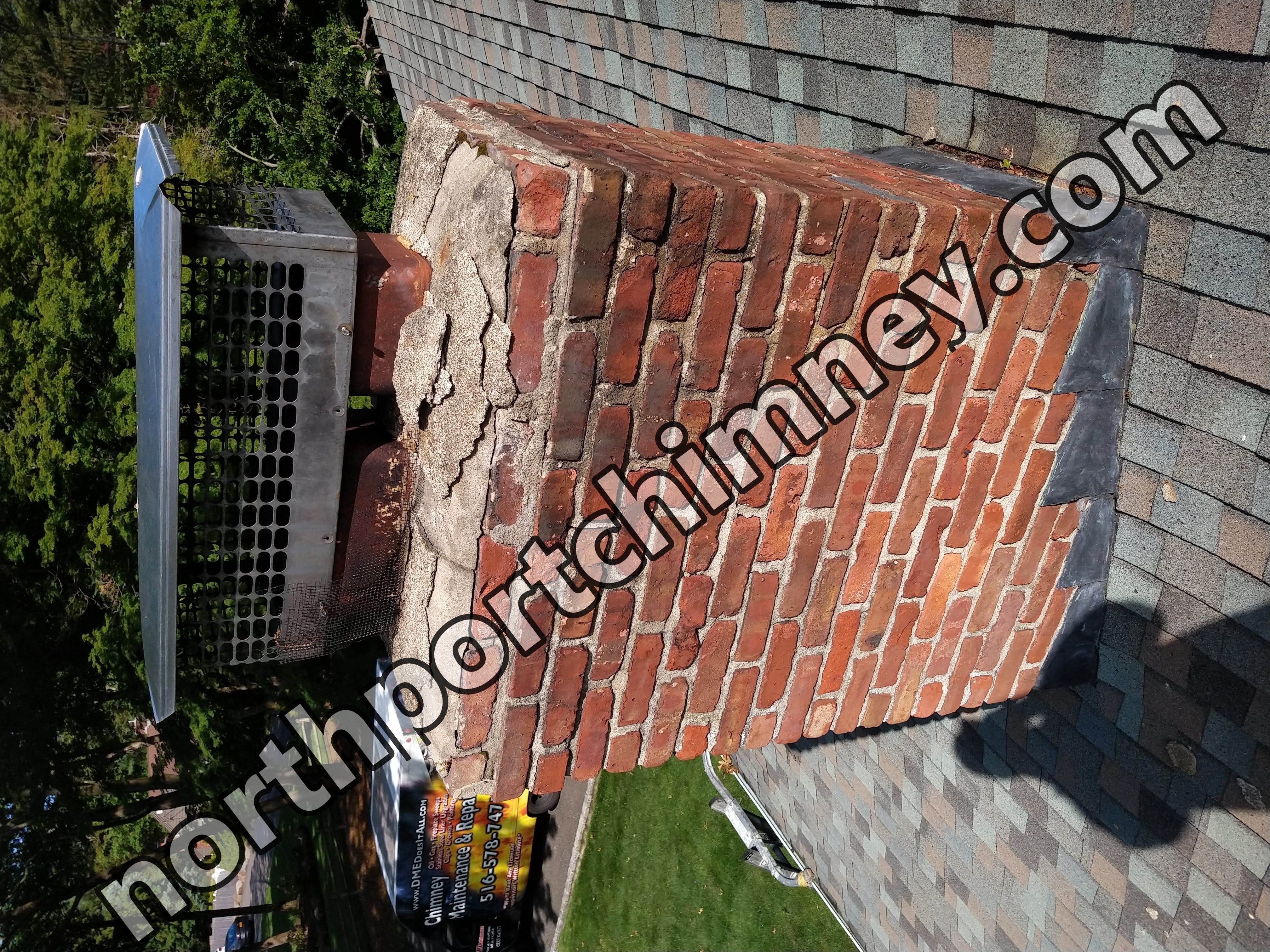
The visible signs of mortar failure are straightforward but easy to miss if you're not looking closely. Gaps between the mortar and brick, missing chunks of mortar, or horizontal cracks running through joints indicate that your chimney needs attention soon. On Huntington homes, you might also notice efflorescence, a white powdery substance on the brick surface that indicates water has been moving through the masonry. Staining around your chimney interior or on your attic framing is another red flag. These signs mean moisture is already at work inside your home.
DME Maintenance has served Huntington and the surrounding Suffolk County, NY area since 2001, bringing decades of experience with Long Island's specific masonry challenges. DME Maintenance understands how the region's proximity to water, seasonal temperature swings, and the age of our local housing stock all combine to stress chimney mortar. We approach each project with the kind of attention that ensures pointing work lasts. We're reachable at 631-316-0622 whenever you're ready to discuss your chimney's condition or schedule an inspection.
Spring is arriving, and with it comes the perfect window for chimney pointing work on your Huntington home. Don't let another heating season pass with a deteriorating chimney exposing your interior to water damage. Reach out to DME Maintenance today at 631-316-0622 to schedule your chimney inspection. Our licensed team will assess the condition of your mortar joints and help you understand your options. The sooner you address mortar deterioration, the sooner you protect your home from the kind of water damage that grows more expensive and destructive with every passing month.
The mortar you see between bricks isn't uniform across all chimneys. Old mortar on Long Island homes often contains a higher lime content than modern formulations, which actually makes it softer and more porous. This softer composition was intentional in earlier construction, allowing the mortar to absorb small movements in the masonry without cracking the bricks themselves. However, this same quality makes older mortar more vulnerable to our region's weather patterns. When you live in Huntington and your chimney experiences temperature swings and salt-laden moisture, that traditional mortar breaks down faster than homeowners typically expect.
Brick selection matters too, and the quality varies considerably across homes on Long Island depending on when construction occurred. Softer, more porous bricks used in older Huntington properties absorb moisture more readily than harder, denser bricks manufactured in recent decades. When mortar fails around these softer bricks, water penetration accelerates dramatically. The brick itself can begin to spall, meaning the surface layer flakes away in chunks. Once spalling starts, the structural integrity of your entire chimney is compromised, not just the mortar joints. Addressing pointing work before spalling occurs is far more effective than waiting for brick damage to become severe.
Chimneys on Long Island also deal with thermal stress that homeowners rarely consider. When you're heating with oil or burning wood in winter, the interior of your chimney experiences significant heat, while the exterior faces cold air and potential ice formation. This creates a powerful expansion and contraction cycle with every heating cycle. The mortar joints endure this stress repeatedly throughout the winter season. In Huntington, where homes often sit exposed to ocean breezes and moisture, this thermal cycling is especially aggressive. Mortar that's already weakened by freeze-thaw damage deteriorates even faster under this thermal strain, creating a cascading cycle of failure that spreads upward from the base.